Impressions Games knew what they were doing in 1994. Caesar came out the year before, and a year later came one of the best ancient world managers ever. But in between, this British team took a detour into war strategy, and the result was... instructive. Mainly as a cautionary tale.
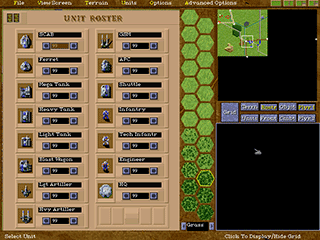
Front Lines is a turn-based war strategy set in an abstract military conflict — no historical battles, no specific setting, just maps, squads of soldiers, and missions with time limits. The goal is straightforward: take a group of units, complete the assigned task before the sand runs out. Sounds like a solid foundation. And back in 1994, it sounded like a solid foundation to us too.
But playing it reveals the problem quickly. The mechanics are so simplified that Warlords — which occupied this niche before — looks like a deep well of tactics beside it. The turn-based system works, mouse controls are bearable, but the decisions you make rarely feel genuinely weighty. Terrain exists, units differ, yet the AI opponent doesn't behave aggressively enough to force you to improvise. Most missions can be completed straightforwardly and reliably, which is a pretty crushing weakness for a war strategy game.

An old note about the game calls it a sterile cross between Warlords and Overlord. Brutally accurate. Front Lines took the turn-based framework from one and some action-oriented unit oversight from the other, but didn't stay faithful enough to either parent to make something of its own. Yet in 1994, the competition — Master of Magic, Panzer General — showed what turn-based strategy could do when someone really sunk their teeth into it. Beside that, Front Lines feels like a quick product that filled a gap in the catalog.
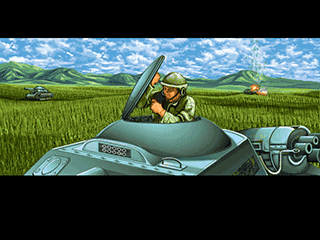
Today, Front Lines will suit you if you're looking for a light tactical break without ambitions. No complicated tech trees, no diplomatic layer, no hours of loading context. Just units, map, missions. If you dabbled in similar games back in the nineties and want to refresh your memory of what this genre also produced on the margins — playing it in your browser without DOSBox installation makes sense. But expect more of a historical document than entertainment that will grab you.
 old
old


 ▶North & South1990MS-DOS / PC


 ▶Teenage Queen1988MS-DOS / PC
 ▶Chess1998Sega Mega Drive


 ▶Warlords1990MS-DOS / PC