I first saw Blood Bowl not on a monitor, but on a table at my older brother's friend's place — a heavy box, loads of plastic figurines, dice in shapes that weren't exactly common in the Czech Republic back then. So when the PC version from Destiny Software Productions showed up in 1995, it was clear I had to get my hands on it.
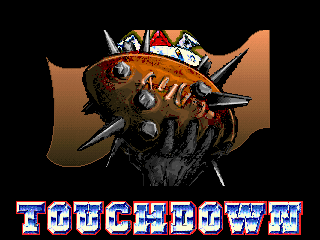
Blood Bowl is an adaptation of the board game of the same name by Games Workshop — American football set in the Warhammer Fantasy world, where orcs, dwarves, goblins, and other races from that universe face off against each other. The goal is simple: get the ball into the opponent's end zone, but the path there is paved with brutal physical contact, injuries, and the occasional player death. The rules are turn-based, the playing field is grid-based — classic board game translated to the screen.
And that's where the complications begin. Destiny decided to approach the game as a real-time platformer rather than the turn-based strategy that the board game Blood Bowl actually is. The result is a strange hybrid: you control one player at a time, the others move on their own, and chaos is practically guaranteed. The system works, but fans of the source material found it annoying back then. It's simply not the turn-based purist experience. The keyboard controls are clunky, and navigating the field is initially confusing.
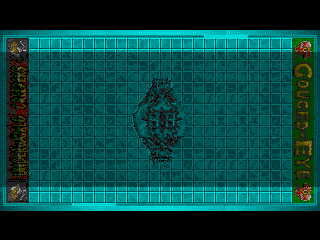
What works for the game are the teams themselves. The different races genuinely play differently — strong players move slowly, agile ones die faster. The atmosphere of the Warhammer world is present, the graphics are solid by 1995 standards, and if you're a fan of the source material, recognizing iconic teams and their character brings a joy that persists despite the game's shortcomings. The sound design is functional, nothing more.

Today, Blood Bowl from 1995 is mainly a curiosity — evidence of how difficult it was to port a complex board game to PC at a time when game designers were still figuring out what to do with such material. The turn-based version came much later and showed that the right path lay in a completely different direction. If you want to see where Blood Bowl went wrong, or you're simply curious what Warhammer looked like on a computer in the mid-nineties, it's worth an hour of your time. For everyone else, it's more of a museum piece than living entertainment.
 old
old
 ▶Prehistorik 21993MS-DOS / PC


 ▶Dangerous Dave in the Haunted Mansion1991MS-DOS / PC


 ▶Toy Story1995Sega Mega Drive

 ▶Commander Keen 4: Secret of the Oracle1991MS-DOS / PC
 ▶Contra1988MS-DOS / PC


 ▶Giana Sisters1987MS-DOS / PC