You never fire a single shot yourself. That's the whole point.
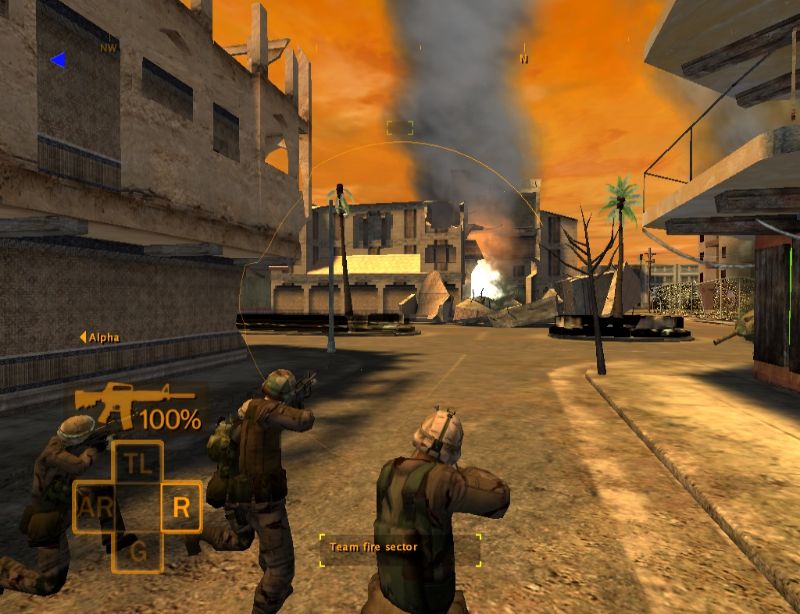
Full Spectrum Warrior dropped in 2004, right when Iraq War footage was running on every news channel around the clock. Pandemic Studios didn't make a shooter about it. They made something stranger and more interesting — a squad tactics game where your job is to think, not pull a trigger. The military connection is real: the original version was built as a training tool for the U.S. Army, and the commercial release was essentially that same software cleaned up and handed to civilians. It shows, in both the best and worst ways.
You control two fire teams, moving them through urban environments, pushing them from cover to cover while managing fields of fire and suppression. The camera floats above and behind your soldiers like a detached observer. You point, you order, you watch. Direct firefights are a fast way to get people killed — the game punishes aggression and rewards patience. Flanking matters. Cover matters. Stacking up before clearing a corner matters. For a 2004 action game, that was a genuinely unusual ask.
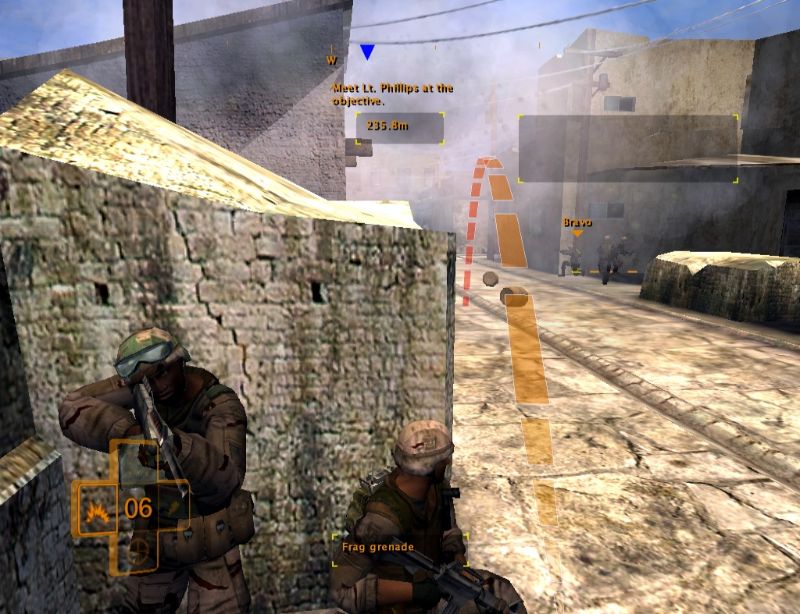
The controls have a logic to them once they click, but getting there takes longer than it should. The interface was clearly designed with a gamepad in mind — the Xbox version came out simultaneously and felt more natural with a controller in hand. On PC it works, but you spend the first hour fighting the system as much as the enemy. Once you stop fighting it, the game underneath is surprisingly tense. A bad order gets someone shot. There's no undoing it.
What Full Spectrum Warrior captured, and what still holds up, is a specific kind of low-level stress. Not the chaos of a shooter, but the creeping dread of making a decision with incomplete information and watching it play out in real time. The AI enemies are predictable by modern standards, and the game has no real flexibility — it wants you to solve each encounter the correct way, and there usually is only one. That rigidity is where it starts to show its age. Less a sandbox, more a puzzle game dressed in desert camo.

It's worth playing today if you have any patience for methodical, thinking-person's tactics and you want something that feels genuinely different from the wave of corridor shooters that surrounded it in 2004. Don't expect freedom. Expect pressure. The game is short, focused, and it respects your brain more than your reflexes — which, at this point in life, feels like a fair trade.
 old
old


 ▶Doom1993MS-DOS / PC


 ▶Ultimate Mortal Kombat 31996Super Nintendo


